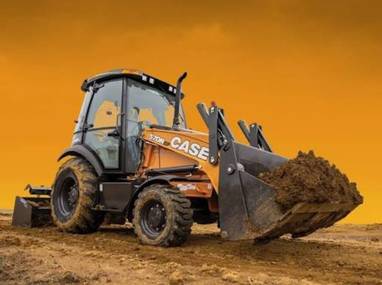
Why Does a Case Excavator Continue Swinging After the Control Lever Returns to Neutral?
Excessive swing overrun occurs when the upper structure of a Case excavator continues rotating due to inertia after the swing control lever returns to the neutral position. This condition is usually caused by delayed swing brake engagement, insufficient braking force, restricted hydraulic return flow, or problems within the swing control system.
When this issue appears, technicians should avoid replacing major components without proper testing. A systematic inspection of the swing lock valve circuit, brake release hydraulic pressure, swing motor brake assembly, and hydraulic passages can help identify the actual cause and prevent unnecessary repairs.
This guide explains a practical troubleshooting process for Case excavator swing overrun problems and shows how contamination inside small hydraulic passages can affect swing braking performance.
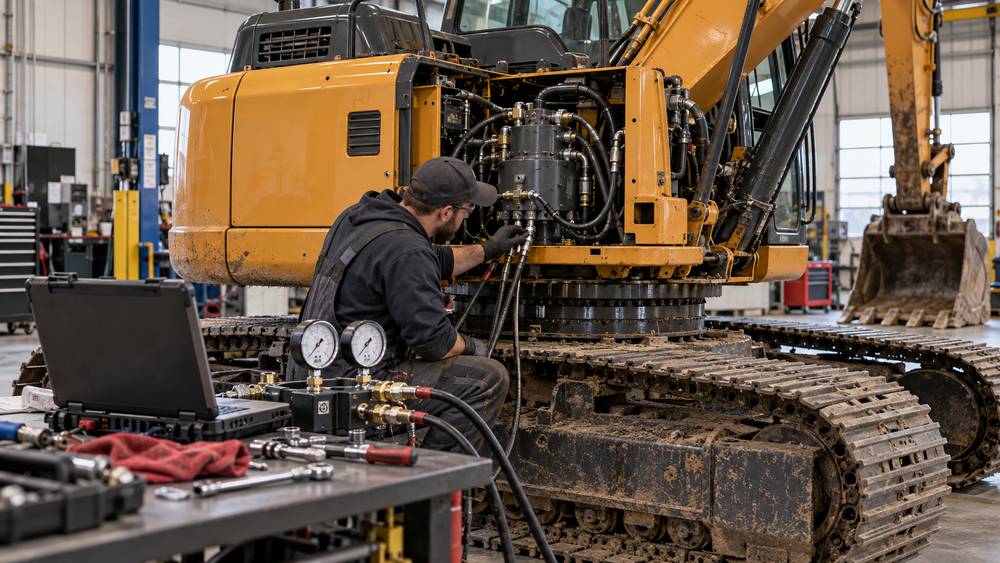
Common Causes of Case Excavator Swing Overrun
The excavator swing system depends on both hydraulic control and mechanical braking components. Excessive swing movement after releasing the control lever may be caused by:
Possible Cause Description
Swing lock valve malfunction Electrical or hydraulic problems prevent correct brake control.
Delayed swing brake engagement Brake pressure changes too slowly during stopping.
Restricted brake return oil circuit Contamination reduces hydraulic oil flow.
Damaged brake springs Reduced braking force allows longer swing movement
Worn seals or internal leakage Incorrect brake pressure control
Hydraulic contamination Debris affects valves, passages, and precision components
A correct diagnosis requires determining whether the problem comes from an electrical control issue, hydraulic pressure problem, or internal swing motor brake failure.
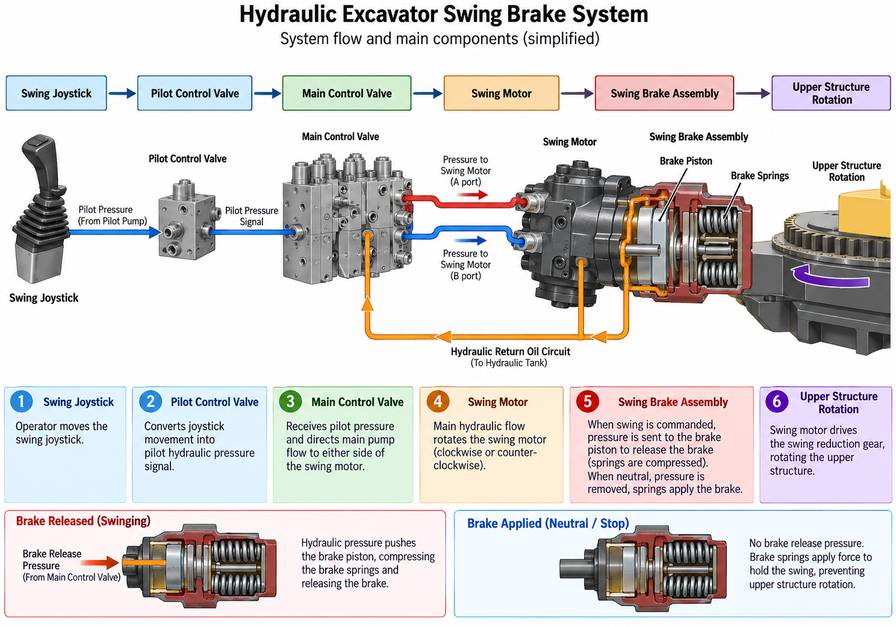
Case Excavator Swing Overrun Troubleshooting Procedure
1. Inspect the Swing Lock Valve Circuit
The first diagnostic step is checking the swing lock valve electrical and hydraulic control circuit.
Verify that:
- Wiring connections are secure
- Connectors are clean and free from corrosion
- No open circuits or short circuits are present
- The solenoid valve coil operates correctly
- The valve spool moves smoothly
The swing lock valve controls the hydraulic process that releases and applies the swing brake. If the valve does not operate correctly, brake engagement may be delayed, causing excessive swing movement.
2. Measure Swing Brake Release Hydraulic Pressure
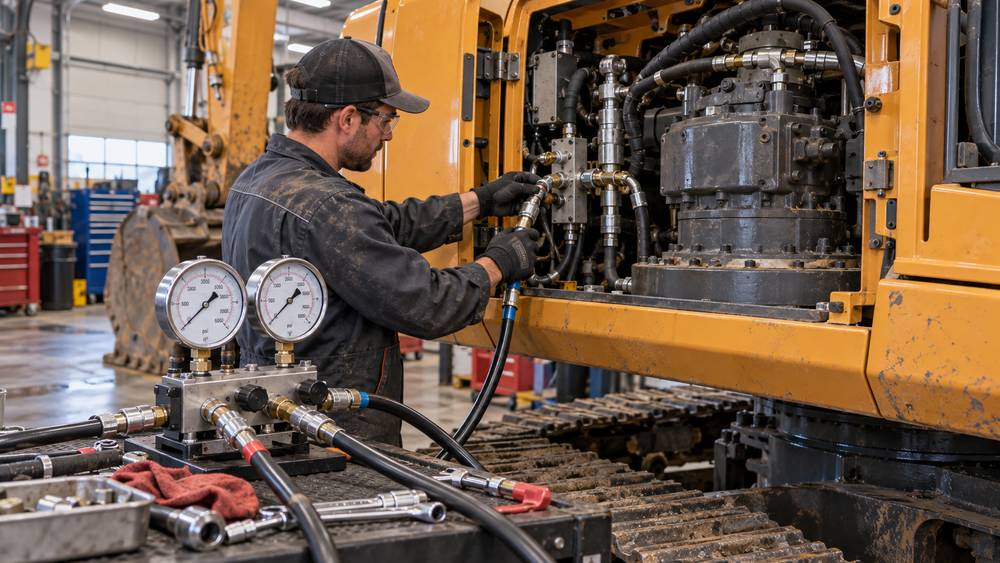
After confirming the electrical circuit, check the swing brake release hydraulic pressure.
In the referenced troubleshooting case, the measured brake release pressure was:
3 MPa
The measured pressure was within the expected range for that machine configuration, indicating that the brake release hydraulic supply was functioning normally.
However, normal hydraulic pressure does not always guarantee correct brake operation. A restricted return passage or internal brake problem can still delay brake engagement.
Always compare pressure measurements with the specifications for the exact Case excavator model and serial number.
3. Remove and Inspect the Swing Motor Brake Assembly
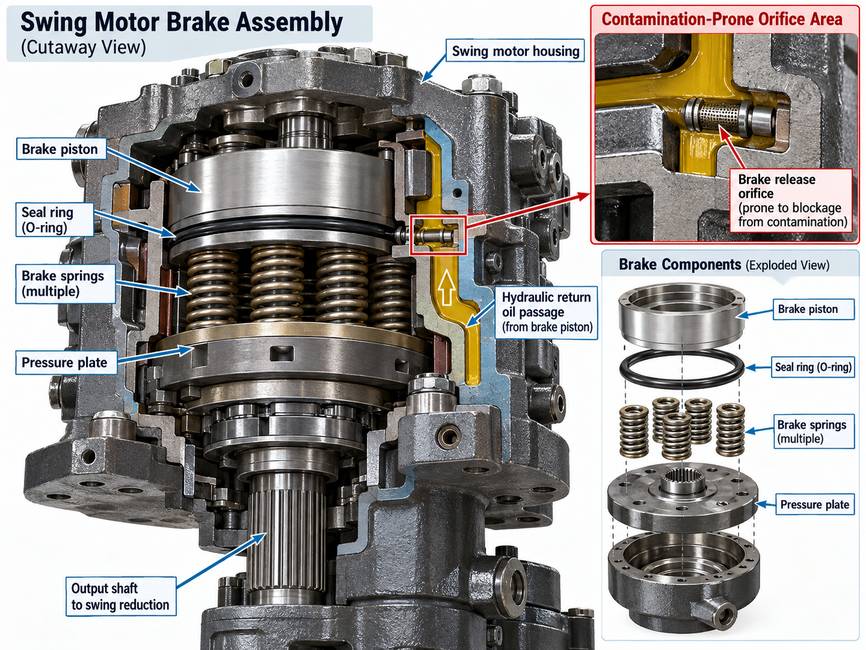
If the swing lock valve and brake pressure are operating normally, inspect the swing motor brake assembly.
Important inspection points include:
Check Brake Springs
Inspect the brake springs for:
- Breakage
- Loss of tension
- Deformation
- Abnormal wear
Weak or damaged springs can reduce braking force and increase swing stopping distance.
Inspect Brake Pressure Plate and Seal Ring
Check:
- Brake pressure plate condition
- Seal ring condition
- Hydraulic leakage marks
- Abnormal wear
A damaged seal ring can affect brake pressure control and delay proper brake operation.
4. Inspect the Brake Return Oil Circuit and Orifice
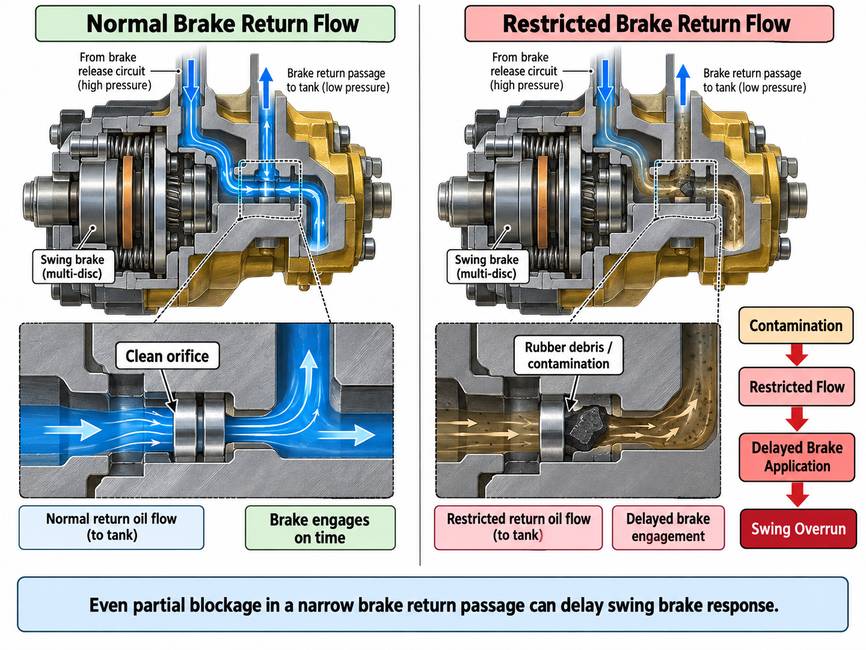
One important cause of excessive swing overrun is restricted brake return oil flow.
During inspection of the swing motor brake return circuit, technicians may find:
- Rubber particles
- Hydraulic debris
- Contamination
- Restricted or partially blocked orifices
In the referenced case, a rubber particle was found near the brake return oil circuit orifice.
Although the orifice was not completely blocked, the contamination restricted oil flow through the passage. This slowed the hydraulic pressure change required for brake engagement, causing delayed braking and excessive swing overrun.
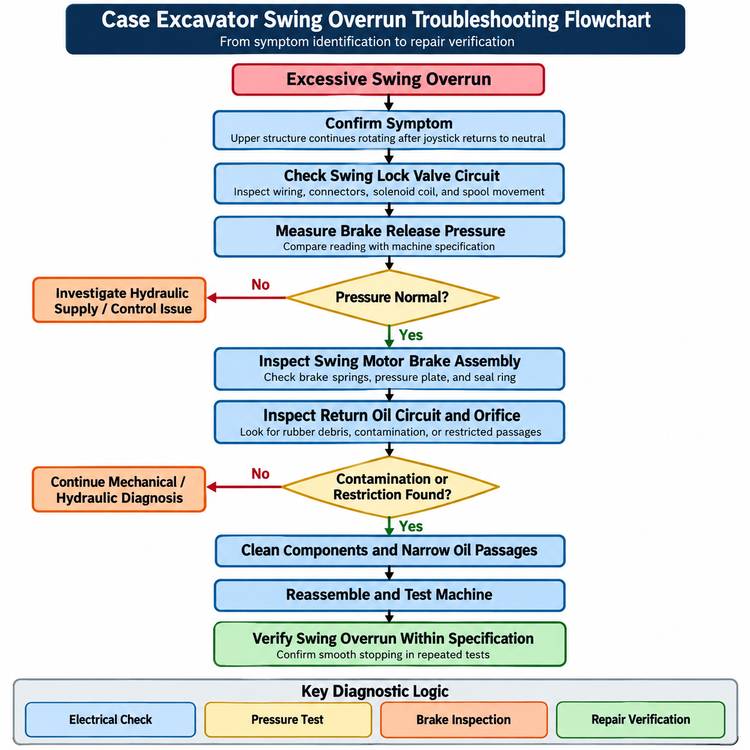
Why Can a Small Hydraulic Restriction Cause a Major Swing Problem?
The swing brake system relies on precise hydraulic control.
The normal stopping process is:
- The operator releases the swing control lever.
- The swing command returns to neutral.
- Brake control pressure changes.
- Return oil flows through the designed passage.
- The swing brake applies.
- The upper structure stops.
If the return passage is restricted:
- Hydraulic oil cannot flow normally.
- Brake pressure changes more slowly.
- Brake engagement is delayed.
- The upper structure continues rotating longer than expected.
Even a small amount of contamination inside a narrow hydraulic passage can significantly affect machine stopping performance.
Repair Procedure
After identifying contamination inside the swing motor brake circuit:
- Remove and inspect the swing motor components according to the correct service procedure.
- Clean the brake assembly carefully.
- Pay special attention to:
- Small orifices
- Narrow hydraulic passages
- Brake return oil channels
- Seal contact surfaces
- Inspect all components for wear or damage.
- Reassemble the swing motor.
- Perform operational testing.
After cleaning the affected components, the excavator should be tested to confirm that swing stopping performance has returned to normal.
How to Verify the Repair
After completing repairs, technicians should confirm:
✅ Swing stops correctly after the control lever returns to neutral
✅ Excessive rotation after command release is eliminated
✅ Swing operation is smooth in both directions
✅ No hydraulic leaks are present
✅ Brake engagement remains consistent during repeated tests
A repair should always be verified under normal operating conditions.
When Should Diagnostic Software Be Used?
Modern Case and New Holland equipment combines hydraulic systems with electronic controls. Diagnostic software can support technicians when electronic systems require additional inspection.
Diagnostic software may help with:
- Electronic control system information
- Communication checks
- Stored fault information
- Sensor and actuator monitoring
- Service procedures where applicable
However, diagnostic software cannot replace hydraulic testing.
For example:
- A blocked brake return orifice
- Contaminated hydraulic passage
- Damaged brake spring
require physical inspection and mechanical repair.
The most effective approach combines:
Hydraulic testing + mechanical inspection + electronic diagnosis
CNH EST Diagnostic Software for Case and New Holland Equipment
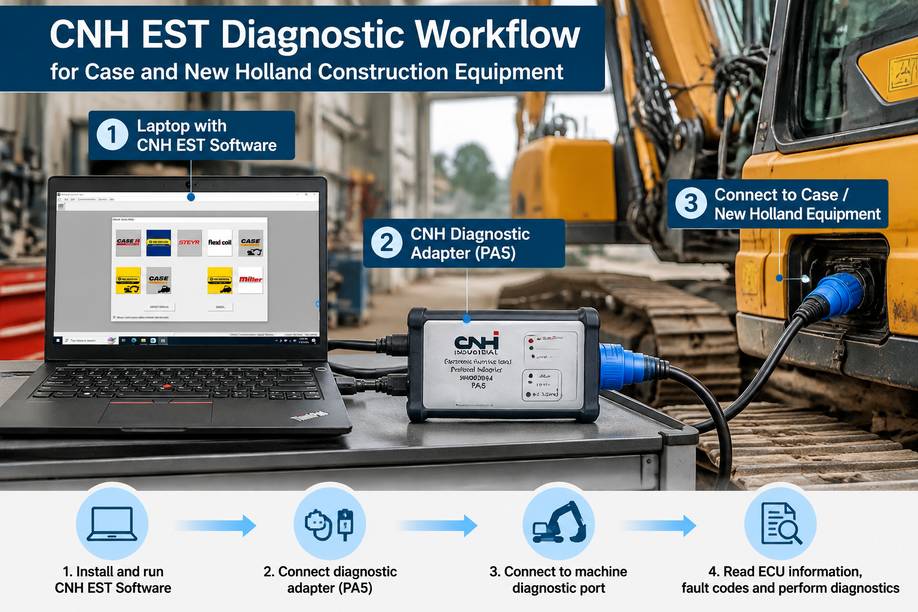
For technicians servicing compatible Case and New Holland equipment, OEM diagnostic software can provide additional support for electronic troubleshooting and service information.
09.2026 CNH EST 9.15 Engineering Diagnostic Software for Case & New Holland
Product page:
CNH EST can be useful for technicians who require manufacturer-oriented diagnostic resources for supported CNH equipment.
Before using any diagnostic software, always confirm:
- Compatible machine models
- Required communication interface
- Available diagnostic functions
- Software installation requirements
- Whether certain functions require additional authorization
For hydraulic swing problems, OEM diagnostic software should always be used together with proper mechanical and hydraulic troubleshooting.
Common Mistakes When Diagnosing Swing Overrun
Mistake 1: Replacing the Swing Motor Too Quickly
A swing motor replacement is expensive and may not solve the actual problem.
Always inspect:
- Swing brake operation
- Return oil passages
- Hydraulic pressure
- Valve operation
before replacing major components.
Mistake 2: Ignoring Hydraulic Contamination
Small particles can affect:
- Hydraulic valves
- Brake passages
- Orifices
- Precision components
If contamination is found, investigate the source to prevent repeat failures.
Mistake 3: Checking Pressure but Ignoring Flow
A hydraulic pressure reading may appear normal while restricted flow still prevents proper brake operation.
Both pressure and hydraulic flow behavior must be considered during diagnosis.
Preventing Future Swing Brake Problems
To reduce the risk of repeated swing system failures:
- Maintain clean hydraulic oil
- Replace filters according to maintenance schedules
- Repair hydraulic leaks promptly
- Avoid operating with contaminated oil
- Follow OEM maintenance procedures
Hydraulic cleanliness is especially important because small particles can affect precision hydraulic components.
Conclusion
Excessive swing overrun on a Case excavator is often caused by delayed swing brake engagement rather than a complete failure of the swing system.
A professional troubleshooting process should include:
- Inspecting the swing lock valve circuit
- Measuring brake release hydraulic pressure
- Checking swing motor brake components
- Inspecting brake return passages and orifices
- Cleaning or repairing contaminated components
- Verifying proper machine operation after repair
A small restriction inside a hydraulic brake return passage can create a significant swing control problem. Careful inspection and a structured diagnostic approach are essential for accurate Case excavator repairs.
Leave a Reply