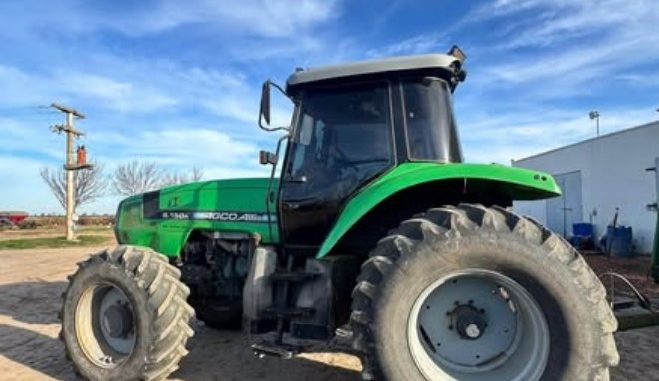
AGCO machines equipped with a DNOX2 aftertreatment system may display SPN 1387 FMI 00, indicating that the measured urea (Diesel Exhaust Fluid) pressure is above the permitted operating range.
This guide explains what the fault means, how it affects machine operation, and how to diagnose a suspected supply-module failure safely.
Fault Code Summary
| Item | Details |
| Fault code | SPN 1387 FMI 00 |
| System | DNOX2 SCR/urea dosing system |
| Fault description | Urea pressure too high |
| Pressure threshold | Above 7.5 bar, or 108.8 psi relative |
| FMI meaning | Data valid but above normal operating range—most severe level |
| Primary suspected cause | Faulty supply module |
| Engine protection response | Engine derate may be activated |
Required Diagnostic Equipment
The following tools may be required:
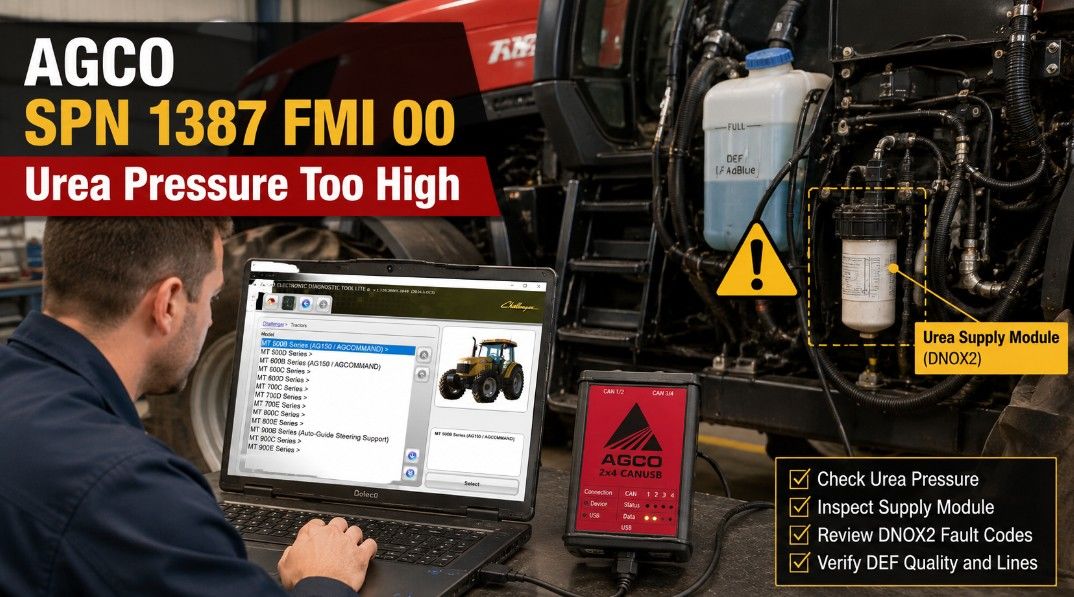
- AGCO 2×4 CANUSB diagnostic interface
- AGCO EDT Electronic Diagnostic Tool
- Compatible diagnostic laptop
- Known-good replacement supply module for testing
- Appropriate hand tools and personal protective equipment
Use a version of AGCO EDT that supports the machine model, engine controller, and aftertreatment system being serviced.
For accurate diagnosis of SPN 1387 FMI 00, use the AGCO Diagnostic Kit with AGCO 2×4 CANUSB. When paired with compatible AGCO EDT software, it allows technicians to read and clear fault codes, monitor live urea pressure, and perform DNOX2 system tests.
Important Safety Information
Before starting diagnosis or repair work, review the applicable DNOX2 General Instructions and Precautions in the official service documentation.
The urea system may retain pressure after the engine is switched off. Allow the system to complete its shutdown procedure before disconnecting hoses, electrical connectors, filters, or supply-module components.
Additional precautions include:
- Park the machine on level ground.
- Apply the parking brake.
- Switch off the engine and remove the ignition key.
- Allow hot exhaust and aftertreatment components to cool.
- Wear eye protection and chemical-resistant gloves.
- Prevent dirt from entering urea lines and connectors.
- Do not substitute water or other fluids for approved DEF or AdBlue.
What SPN 1387 FMI 00 Means
The DNOX2 control system monitors urea pressure generated by the supply module.
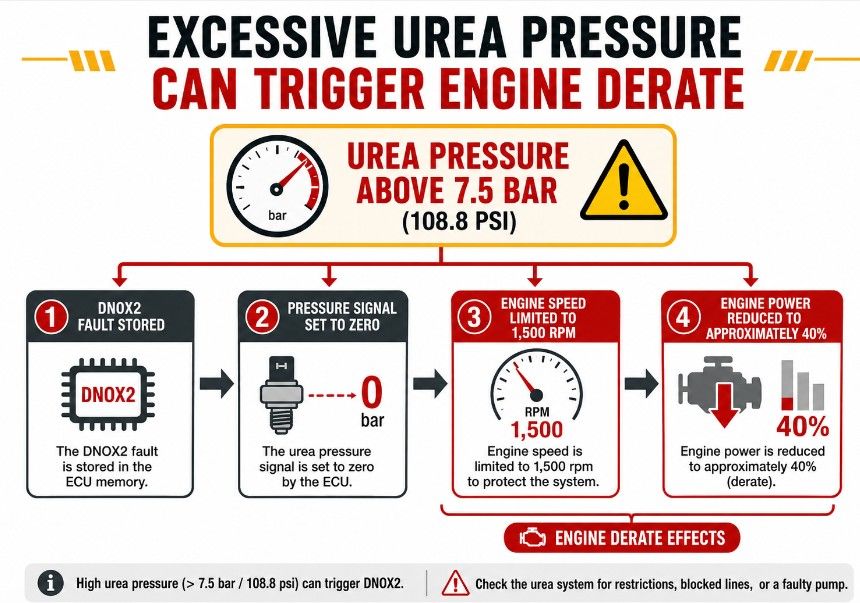
SPN 1387 FMI 00 is activated when the measured pressure exceeds approximately:
- 7.5 bar
- 108.8 psi relative pressure
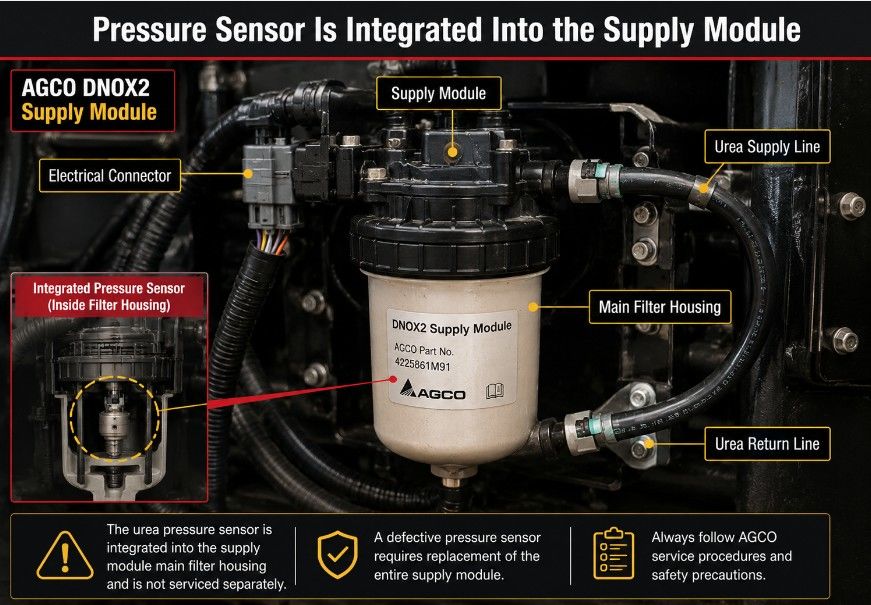
The urea pressure sensor is installed inside the supply module’s main filter housing. On many DNOX2 supply modules, the sensor is not available as a separately replaceable component.
When the fault becomes active, the system may:
- Broadcast the diagnostic code on the engine CAN bus
- Store the fault in the DNOX2 EEPROM
- Set the reported urea pressure signal to zero
- Activate an engine power-derate strategy
Depending on the machine configuration, engine speed may be limited to approximately 1,500 rpm, while engine power may be reduced to about 40% of the maximum fueling level.
Most Likely Cause
The primary cause listed for this fault is:
- Internal failure of the DNOX2 supply module
Possible internal problems may involve the pressure sensor, pump-control components, pressure regulation, or internal contamination. Because the pressure sensor is integrated into the module, individual sensor replacement may not be possible.
Diagnostic Procedure
1. Confirm the Active Fault Code
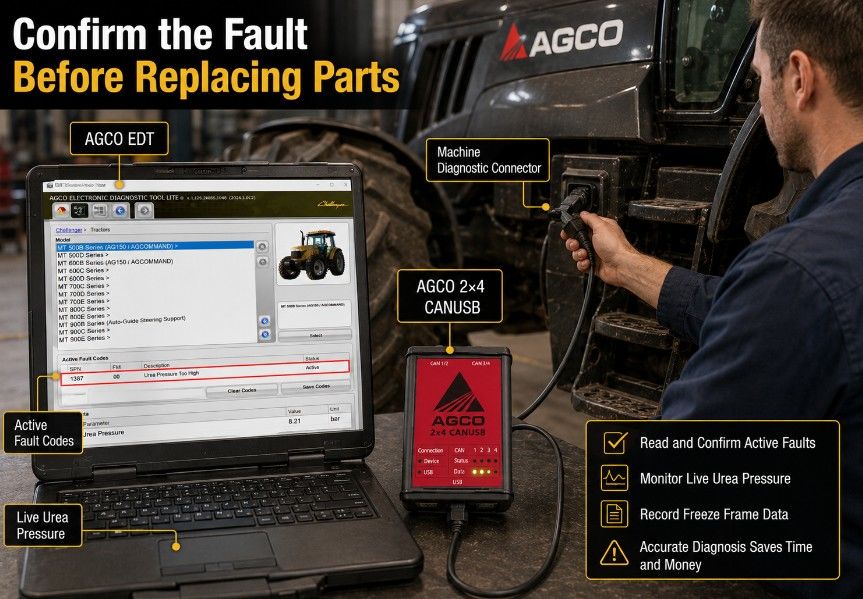
Connect the AGCO diagnostic interface and open AGCO EDT.
Confirm that the active code is:
SPN 1387 FMI 00 — Urea Pressure Too High
Record:
- Active and stored fault codes
- Machine model and serial number
- Engine operating hours
- Freeze-frame information
- Urea pressure readings
- Supply-module voltage
- Related SCR or DNOX2 fault codes
Do not replace the supply module based only on a single stored or inactive code.
2. Check for Related Fault Codes
Review the complete DNOX2 fault-code list.
Related faults involving the following systems may affect the diagnosis:
- Supply-module power supply
- Ground circuits
- CAN communication
- Urea temperature
- Pump control
- Pressure sensor signal
- Frozen or contaminated DEF
- Restricted urea lines
- Return-flow problems
Repair active electrical, communication, or fluid-quality faults before condemning the supply module.
3. Inspect the Urea System
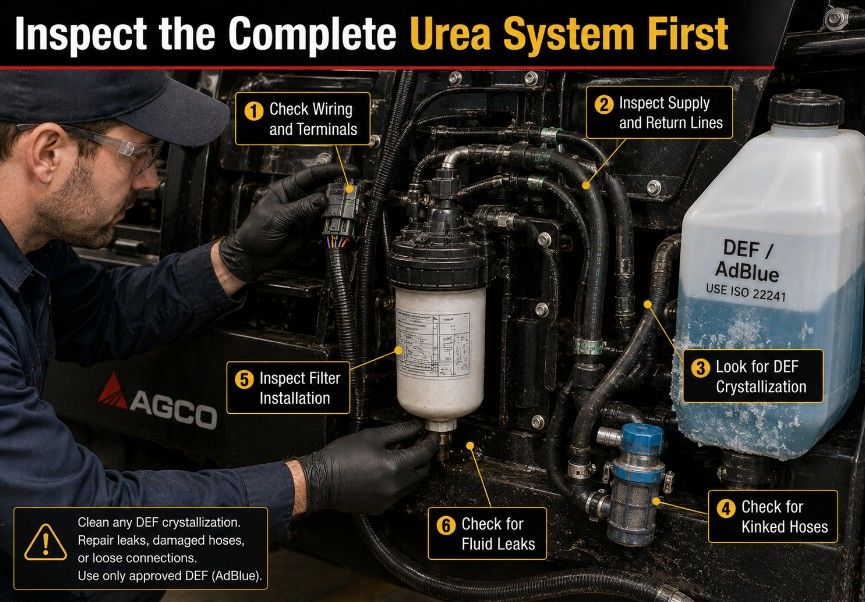
Carry out a visual inspection of:
- Supply-module electrical connector
- Wiring harness and terminals
- Urea supply and return lines
- Main filter housing
- DEF tank and pickup unit
- Signs of crystallization
- Damaged or kinked hoses
- Incorrectly installed filters
- Fluid leakage or contamination
Clean crystallized DEF carefully and repair damaged wiring or hoses before continuing.
4. Check the DEF or AdBlue Quality
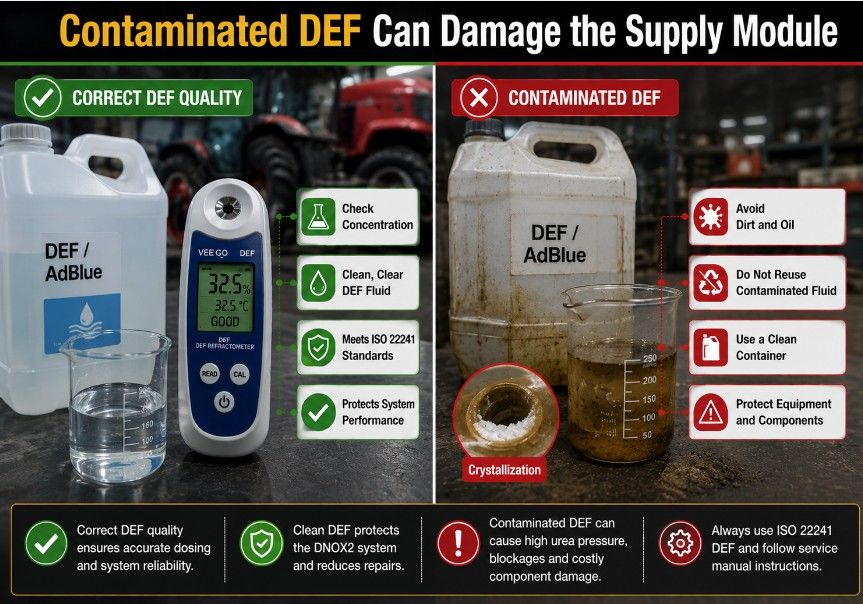
Verify that the tank contains approved, uncontaminated Diesel Exhaust Fluid.
Poor-quality or contaminated fluid can damage the pump, filter, pressure-regulation components, and dosing system.
Do not reuse DEF that has been drained into a contaminated container.
5. Monitor Urea Pressure in AGCO EDT
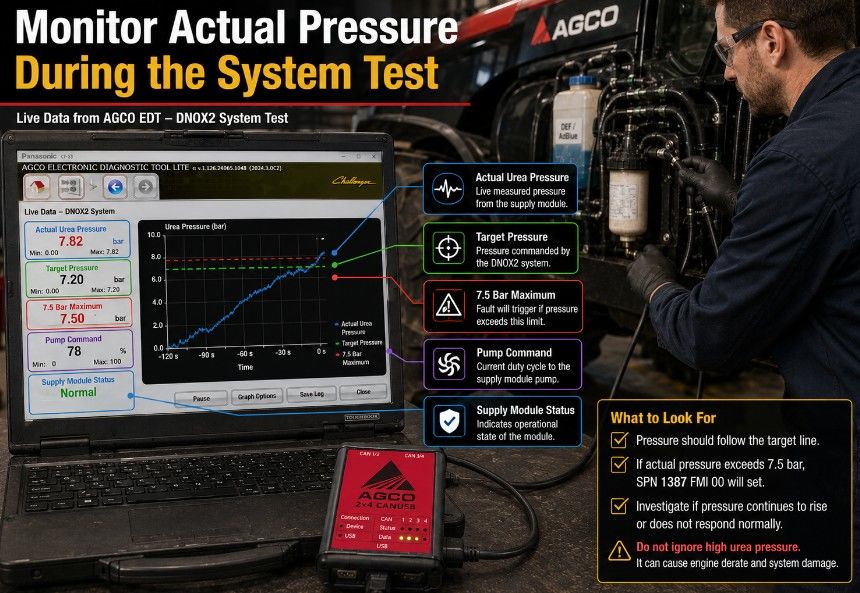
Use AGCO EDT to monitor actual urea pressure during the appropriate system test or engine operating condition.
Compare the reading with the specifications in the machine-specific service manual.
A pressure value that rapidly rises above 7.5 bar, remains implausibly high, or does not respond normally during the test may indicate an internal supply-module problem.
6. Inspect the Filter and Fluid Lines
A restricted filter or blocked return path may influence pressure regulation.
Inspect the system according to the official service procedure and verify that:
- The filter is installed correctly
- The correct filter type is used
- Fluid lines are not blocked
- Return flow is not restricted
- Connectors are fully seated
- No internal line damage is present
Replace the filter only when required by the maintenance schedule or diagnostic procedure.
7. Test With a Known-Good Supply Module
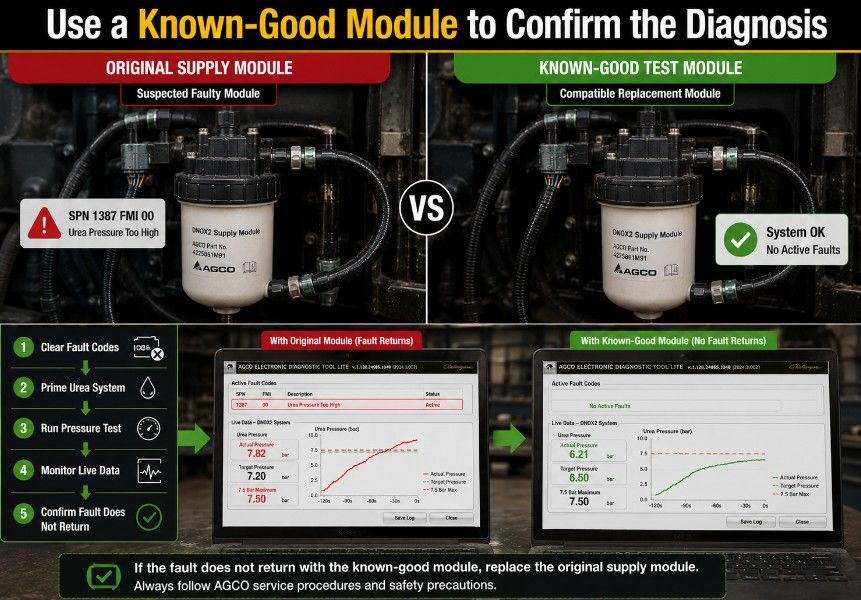
When the wiring, fluid quality, hoses, filters, and related fault codes have been checked, the recommended confirmation method is to install a compatible known-good supply module.
After installation:
- Connect AGCO EDT.
- Clear the stored fault codes.
- Perform any required supply-module priming procedure.
- Run the applicable pressure or aftertreatment test.
- Monitor the actual urea pressure.
- Check whether SPN 1387 FMI 00 returns.
If the fault disappears with the known-good module, the original supply module is likely defective.
Repair Recommendation
Replace the supply module only after confirming:
- The correct fault code is active
- Wiring and power supplies are satisfactory
- DEF quality is acceptable
- Supply and return lines are unrestricted
- Filters are correctly installed
- No other DNOX2 faults explain the pressure problem
- A known-good module eliminates the fault
Confirm the correct supply-module part number using the machine serial number and the AGCO parts catalog.
Final Verification
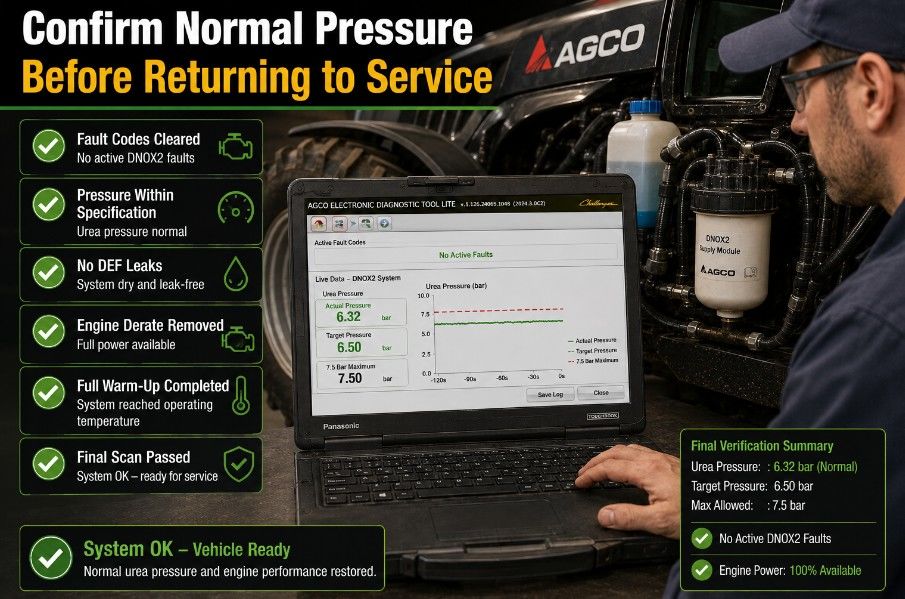
After completing the repair:
- Clear all DNOX2 and engine fault codes.
- Prime the urea system if required.
- Run the AGCO EDT pressure test.
- Confirm that pressure remains within specification.
- Check for DEF leaks.
- Verify that no warning messages return.
- Confirm that the engine derate is removed.
- Operate the machine through a complete warm-up cycle.
- Perform a final diagnostic scan.
Do not return the machine to service until the urea pressure remains stable and the fault code no longer returns.
Frequently Asked Questions
What does SPN 1387 FMI 00 mean on an AGCO machine?
It means the DNOX2 system has detected urea pressure above the permitted operating range. The fault is normally triggered when pressure exceeds approximately 7.5 bar relative.
Can the urea pressure sensor be replaced separately?
On the DNOX2 configuration described in this procedure, the sensor is located inside the supply module’s main filter housing and is not separately replaceable.
Will this fault reduce engine power?
Yes. The EEM3 control system may activate an engine derate. Engine speed can be limited to approximately 1,500 rpm, and available fueling may be reduced to around 40%.
Can I clear the code and continue operating?
Clearing the code does not repair the underlying problem. If excessive pressure remains, the fault and engine derate will return.
How can I confirm that the supply module is faulty?
After checking the wiring, DEF quality, filters, and fluid lines, install a compatible known-good supply module. If SPN 1387 FMI 00 no longer returns, the original module is likely defective.
Conclusion
AGCO SPN 1387 FMI 00 indicates that the DNOX2 urea pressure has exceeded the allowed maximum value. Although a defective supply module is the primary suspected cause, technicians should first inspect the wiring, fluid quality, filters, hoses, and related diagnostic codes.
Using AGCO EDT to monitor live pressure and testing with a known-good supply module provides a more reliable diagnosis than replacing parts based on the fault code alone.
Leave a Reply